|
Lakewood, Colorado, USA
NWP award-winning essay authored by Lauren.
2025 Honorable Mention
|
Whenever I visit the beach to gaze at the beauty of the waves lapping at the shoreline, I end up discovering a plastic cup or a bottle cap sitting on the sand and find myself doing an impromptu beach cleanup. Yet, plastic pollution is not the only issue the ocean faces. Climate change, overfishing, coral bleaching, and other problems affect the ocean. I believe that protecting the ocean needs to be addressed more by everyone. The destruction of the sea concerns not just the life that lives in it but us humans as well. We rely on the ocean for food, oxygen, and a fit economy. Our health depends on the ocean's health.
What is the first step to encouraging more people to change their behavior to help the ocean instead of hurting it? It is awareness and knowledge. If people don't know about the destruction of the ocean or how it affects them, they will never take action.
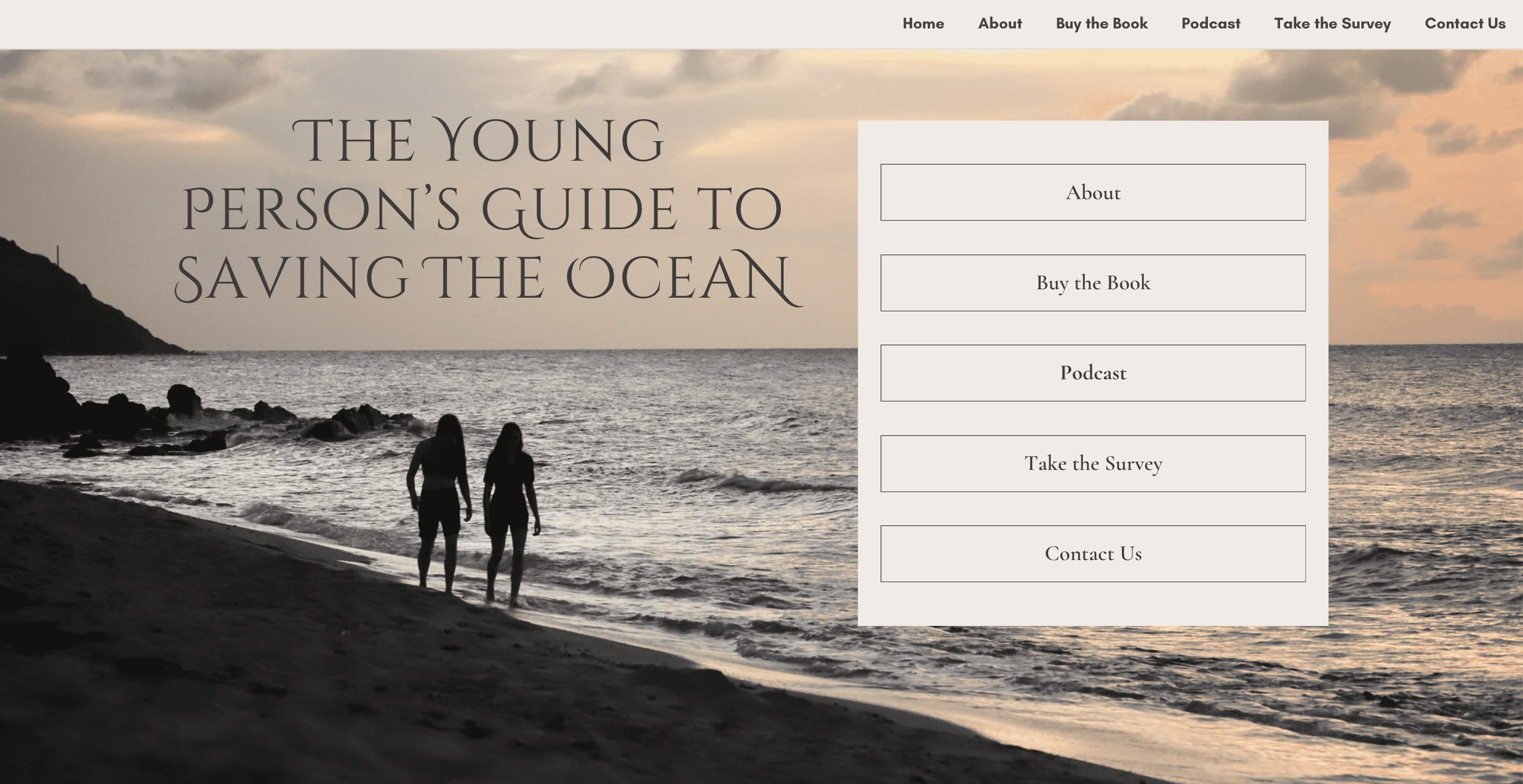
Realizing this, I decided to write The Young Person's Guide to Saving the Ocean, a book to raise awareness about the issues the ocean is facing so that people could recognize we cannot live with a dead ocean. I partnered with the organization Covalence Global and led a team of young ocean conservationists from all over the world, ranging from New Jersey to Nigeria, to write this book. My fellow Girl Scouts in Colorado also volunteered to help me create the book. Ultimately, I did not want this to be a "doom-and-gloom" book. I wanted to inspire hope and action rather than debilitating uncertainty and worry. So, I made this book an action guide, not just a book about what's going wrong in the ocean. I hope that readers of my book will be motivated to use their strengths and skills to help save the ocean, whether it's creating art that raises awareness about climate change or coding an app to help people reduce their plastic use.
I also reached out to many people to interview them about environmental action projects they've done to include them in the book. I interviewed youth ocean conservation activists from California, Florida, New Jersey, and more. I was excited to meet people from so many corners of the country during my project and learn about how they, as young people, are contributing to saving the planet.
I recorded some of the interviews I had with these youth activists and create a podcast on Spotify called The Young Person's Guide to Saving the Environment, so that young people gain an insight into how other teenagers like them are taking action. The podcast has been listened to across the nation and around the world, from Tennessee to Spain to Indonesia. I hope youth from all around the world continue to be inspired by the stories on the podcast!
I also decided to set up and run a community event through my local public library to bring ocean conservation action closer to my own local community in Lakewood, Colorado. Attendees learned about "artivism" and created their own ocean activism posters. They also investigated local water issues that they could write letters to their elected officials about and drafted a letter to them. At the end, I gave the attendees free ebook copies of The Young Person's Guide to Saving the Ocean so that they could continue to learn more about how to take environmental action for the ocean. From the survey at the end of the event, 100% of the respondents said that they learned something new and useful about ocean conservation from the event. Interestingly, the most common response to what the attendees learned from the event was that they learned about how different clothing fabrics had different sustainability levels and how some fabrics can put microplastics in the ocean. It makes me happy that I was able to raise awareness about that because the sustainability of the clothing industry isn't talked about often enough.
Writing and publishing the book on Amazon, creating the podcast, and running the community event presented various challenges, and I learned many valuable lessons from confronting those obstacles. There was a point in the project when I wondered if I could really finish writing the book since it seemed to be taking forever, and it was daunting how much I had to write. My original plan was too idealistic and fell into shambles because I didn't plan on specifically how I would tackle writing the various chapters of the book with the other contributors. I created a new plan, a detailed to-do list, and with some discipline and better time management, my plan succeeded. As some of the other volunteers were having trouble submitting their writing on time, I also made sure to offer contributors the option to extend deadlines if they had circumstances that prevented them from submitting writing on time so we could communicate with each other on that and avoid stress on both sides. I discovered the importance of clear and effective communication when leading a project and how essential it is to be flexible and empathetic in leadership.
I also learned that there is so much I don't know about ocean conservation and was humbled by the depths of how much information there is about the various issues and actions people take to help the ocean. I thought I was knowledgeable about ocean conservation because of all the books I had read and documentaries I had seen on the subject, but as I researched and wrote the book, I realized that there are tons about ocean science and conservation I don't know. As someone who is an aspiring biologist, this was a valuable lesson, and writing The Young Person's Guide to Saving the Ocean was a great way to learn about oceanography, climate science, ecology, and more.
After leading a team of contributors to write this book, I understand much better how to manage, communicate with, and support a team. I am proud that because of our collective efforts, we successfully published the book and gave young people worldwide the information and guidance to become ocean conservation leaders in their own communities. As I move forward in college and my future career, I am confident that this project has positively impacted my leadership skills. I have learned so much about making better decisions to improve relationships between the people I work with and solving problems by adapting when I need to. I had always had the goal of writing a book someday, and I am glad I got to write a book on a topic I was passionate about and take a step further into my interests in science communication, ocean literacy, and writing. Completing this project has given me more confidence to lead projects like this in the future, and I have no doubt that the experiences I had publishing the book, creating the podcast, and setting up a community event will help me in countless ways in the future.
|