|
Swarthmore, Pennsylvania, USA
NWP award-winning essay authored by CJ.
2025 Honorable Mention
|
Untouched water flows through a cycle of rebirth, carrying along oxygen and nutrients,
seeping into the soil and soaking past plant roots, the cold rushing waves of the creek rising as
rain glides past its banks. In the water, lively fish are diverse in species and the insect
community thrives. Paved streets, compacted lawns, and blacktop driveways are prevalent in a
community like mine. The rain cannot soak its drops into the ground as it falls on these
impenetrable surfaces. The heat of the sun warms the roads and the water as it drains into
sewers, escaping to the vulnerable creek. This fresh deposit of stormwater does not carry the
precious life-giving nutrients and saturated oxygen the stream needs. Instead, it is too warm,
riddled with road salts, dripping with lawn chemicals, washed into the stream with the rain. This
polluted reality for nearly a third of all of Pennsylvania's waterways becomes a concern for the
quality of drinking water, loss of healthy habitat, and the livelihoods of the people and organisms
reliant on clean water.
I have a passion for the environment, particularly aquatic systems, stemming from my
love of crafting planted aquariums. Caring for my fish tanks revealed the precious roles that
plants, animals, and humans play in an environment built on balance. Too many fish would
create nutrient pollutants, too many plants would tangle and die out in their own overgrown
shadow, and too much human intervention would throw off the development of the
mini-ecosystem within. Outside the tank, human influences have already played a
heavy-handed role in the destruction of balance. Healthy clean water, an essential factor for life,
grows foul as the climate becomes intensely unstable. Because of this, I became interested in
diving deeper into the world of water for the Apprentice Ecologist Project.
I first began learning about my watershed at my internship with the nonprofit group
Willistown Conservation Trust. I discovered that studying the quality of small headwaters in my
area could reveal pollutant issues, which when addressed, would limit downstream effects in the
Delaware River- a major drinking water source for millions across five states. Thus, I chose to
conduct a water quality assessment of a local waterway: Little Crum Creek, within Little Crum
Creek Park in Swarthmore, Pennsylvania. Little Crum Creek Park is the largest public park in
the borough, making it an essential green space amidst numerous mall complexes and
residential buildings. The park is beloved by the community, providing a slice of nature and an
area for recreation. Within it, Little Crum Creek cuts through, relaxing in the shaded areas of the
arching trees, before continuing its journey under roadways and through majorly developed
areas that pour toxins in with every rainstorm. Because Little Crum Creek is a small stream
system, it is highly sensitive to negative environmental changes, which is evident in its
designation as an impaired stream by the PADEP . In my research I learned that from 1971 to
2024, the land use in the Little Crum Creek watershed became increasingly developed for
residential and retail purposes, directly harming the water quality of Little Crum Creek. The only
existing water chemistry data for the creek is dated to 1971, which makes an updated study
crucial to understanding the causes of pollution and action items to restore the stream's health.
With the support of my high school science teacher, my mentor at Willistown, and the board of
the volunteer group Friends of Little Crum Creek Park, I put together a project that would gather
new information about the health of Little Crum Creek and share the importance of clean
streams with the community.
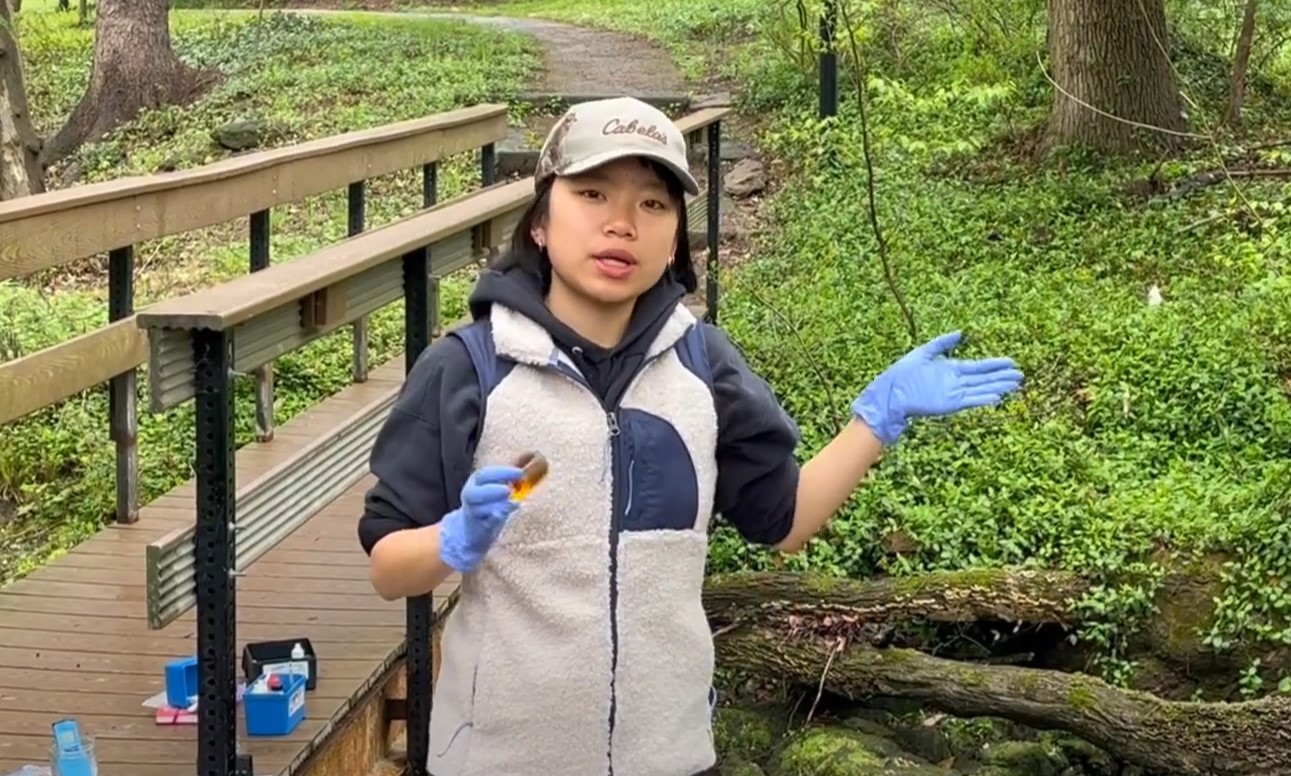
My project began in March, where I took samples for a three-month period from multiple
sites along Little Crum Creek and performed tests for pH, conductivity, chloride, turbidity, water
temperature, dissolved oxygen, nitrogen, and phosphorus. To do this, I waded into the creek
every couple weeks in my rainboots, rinsing each test tube with creek water three times to
reduce contamination, and collecting the sample. For each test, I carefully followed the same
procedure and recorded every observation to eliminate outstanding variables. The tests
revealed that the water temperature and salt levels were beyond state requirements and there
were elevated levels of pollutants. On the last sampling day, I also performed a brief
macroinvertebrate survey where I looked through sticks and rocks, and dug in the substrate,
discovering only midges, snails, and a spare caddisfly. The presence of these organisms and
the lack of pollution-sensitive species was a concern. I noted that this lack of diversity in the
stream supported the conclusion that high temperatures and contamination were limiting the
creek's ability to become a healthy habitat. Altogether, the data indicated that the water quality
was not high enough to sustain many organisms which will continue to be an issue for
ecosystem resilience as the climate worsens.
In April, I led an education event in honor of Earth Day at Little Crum Creek Park
attended by thirty community members of all ages. I demonstrated my sampling methods and
explained the importance of keeping pollution out of the watershed. I showcased my preliminary
results and encouraged interested members to test their own streams. I was pleasantly
surprised with the audience's engagement with my work, and it was inspiring to be able to talk
with others who were also invested in the health of the community. I answered lingering
questions and connected with many who returned as volunteers at park events. Additionally,
with the assistance of a grant, I collaborated with the Friends of Little Crum Creek Park to create
a planting day event where community members participated in filling the streambank of Little
Crum Creek with native plants to create a riparian buffer. These plants would send roots to hold
the soil in place during flood events and provide essential habitat to the previously barren area.
In May, I produced a final water quality report that included a methods section with
detailed procedures for water sampling, my data from each site, and a thorough analysis of the
results in a discussion section. Specific recommendations for individual and local organizations
were included to address the pollution concerns evident in the study. It was published online and
made accessible to the public with a summary of the report's findings. I later authored a blog
about my project, published in the Willistown Conservation Trust blog series, that further
emphasized the importance of watershed protection.
In June, I shared my report through a slideshow presentation for my high school's
science classes. I was able to connect with my peers about the environment we grew up in
together. Most students were familiar with Little Crum Creek Park already and were motivated to
sign up as volunteers when learning about the creek's deteriorating health. I hosted a second
presentation for interested teachers and administrators who became wonderfully curious about
the state of their waterways, opening an opportunity for further studies and discussions about
the local environment.
My study gave Little Crum Creek another chance at restoration and provided the
community with new information and tools to tackle the specific issues that affect not just the
creek, but the ecosystem it supports downstream as well. It connected local water quality issues
with the impact of human influence in my own neighborhood, giving me a new perspective on
the balance of nature. Completing my Apprentice Ecologist Project has also taught me the
importance of starting small, utilizing available resources, and finding support from other
passionate individuals. I never noticed the quiet support of my neighbors and friends until we
came together as volunteers and students of nature. I am inspired by the fact that the small
efforts of many can contribute to a large difference for all. This project has driven me to embrace
my love for scientific research and environmental education, and I cannot wait to continue
learning and volunteering in college as an environmental studies major.
|