|
Belmar, New Jersey, USA
NWP award-winning essay authored by Alexandra.
2025 Winner
|
Ocean Entanglement to Community Engagement
Growing up in a seaside town has profoundly shaped who I am. There are no words to describe how grateful I am for the ocean. Since I was young, I've had a deep love for animals and a strong desire to become a veterinarian. My connection to animals runs as deep as my connection to the ocean. With these passions in mind, I am dedicated to giving back to my community by working to help aquatic life and advocating for a healthy and clean ocean.
In high school, I took on significant leadership roles in Clean Ocean Action, a non-profit organization focused on addressing water-related issues and implementing initiatives to enhance the well-being of rivers and the ocean. I became a Junior Beach Captain in freshman year, which involves coordinating statewide beach clean-ups. Volunteers like me gather to prepare for these bi-annual beach sweeps across the state every fall and spring. My responsibilities include organizing sign-ups, ensuring supplies, and promoting the beach sweep within the community. As my town's junior beach captain, I assist with sign-in and motivating others to join us on the sweep days. I believe giving back and actively engaging in my community is crucial, as nature provides me with so much, and I know I am responsible for safeguarding it.
While serving as a Junior Beach Captain, I was informed about an opportunity called the Student Environmental Advocates and Leaders (SEAL) program organized by Clean Ocean Action. After applying, I was accepted into the program, which ran throughout the school year and involved Monmouth and Ocean Counties students in New Jersey. This is where my love for leadership began, and I made it my personal goal to learn how to contribute to my community through environmental efforts. These students and I regularly gathered at the Clean Ocean Action headquarters, where we were addressed by various speakers, including town mayors, college students, environmentalists, and marine biologists. Listening to these impressive individuals gave me the confidence to start stepping out of my comfort zone and pursuing something bigger than myself. I began researching ways to be involved and learned about previous opportunities of the Apprentice Ecologist Projects on behalf of the Nicodemus Wilderness Project. Feeling inspired, this was the perfect push to get me started.
Something that always troubled me was the issue of marine life entanglement because, ultimately, the carelessness of human beings caused this substantial problem. Ghost gear is named for nets, fishing lines, rope, and unused fishing gear dumped into the ocean to be swallowed or entangled in marine life. Living by the water, I had experience with the fishing world and realized that the monofilament fishing line is the most common type of line used. However, it is also hazardous to marine life as it is clear and, when broken down, becomes microplastics and nanoplastics. Combining my love for animals, my wish to help them, and my passion for the ocean, creating a solution to disposing of this fishing line in my local area was perfect. I am helping prevent animals' entanglement and digestion of the line while also preventing the breaking down of this line into the water and damaging the water quality.
I created my very own campaign to focus on Monofilament Fishing Line Recycling and Ocean Pollution. As the president of the Surfrider Club at my high school, a club focused on ocean issues, this was a perfect opportunity to get my club involved. I contacted the Surfrider Foundation, the organization associated with my club, and learned about their project involving monofilament line recycling containers placed in popular fishing areas. This would allow for less ocean pollution throughout my local town. I researched and found the appropriate contact and asked if someone from the Surfrider Foundation was willing to help me organize a workshop with my Surfrider Club at my school, and they excitedly said yes. I also had to go to my club advisors, teachers, and principal to confirm this was allowed. Through constant meetings with teachers and my principal, we successfully set up a date for the workshop!
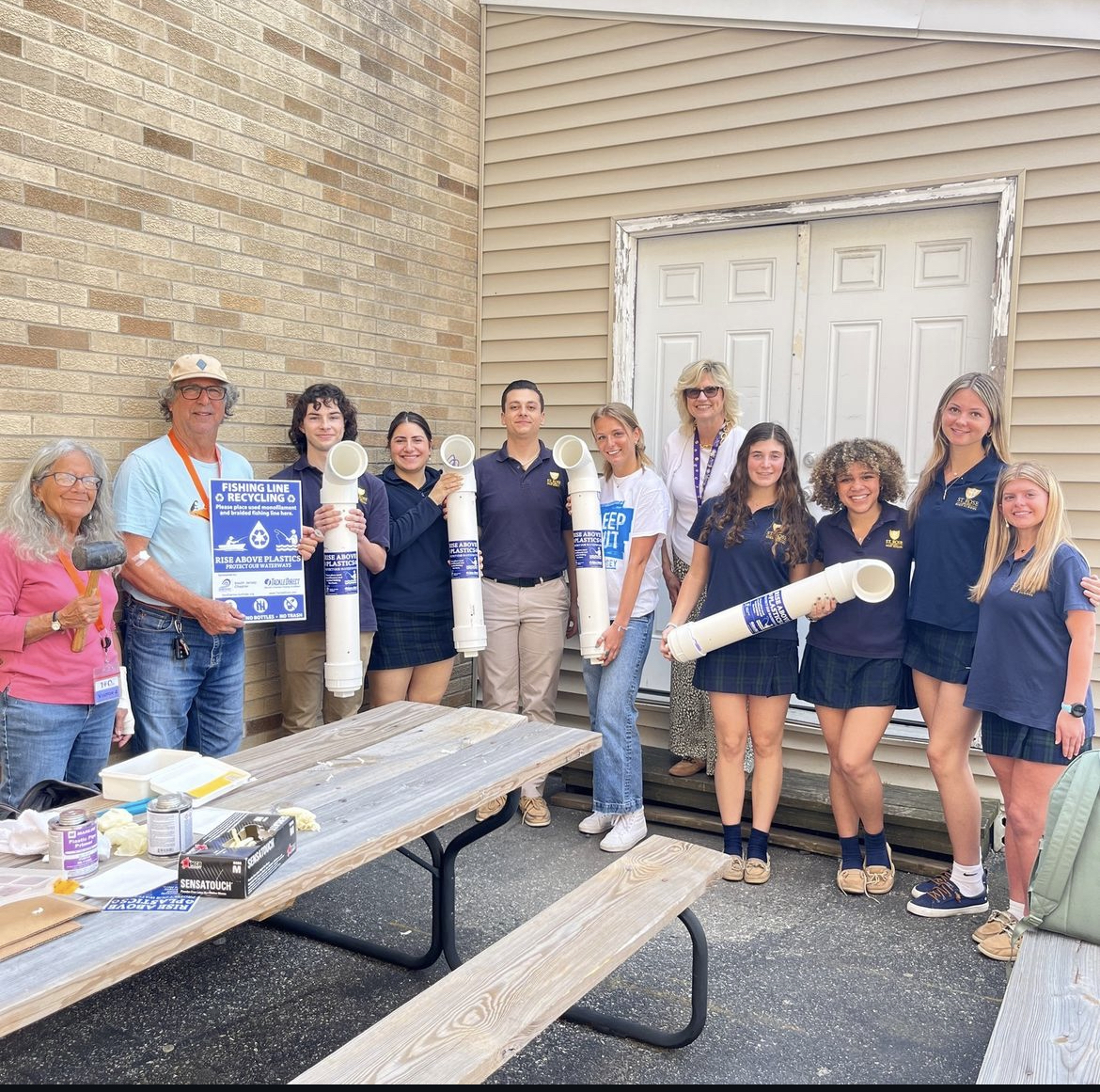
Before the Surfrider Foundation came to my school, I decided to give a small presentation on why we should do something like this for our community and environment, to allow the students and even teachers to get more informed on issues including pollution and how it even affects them. The Surfrider Foundation came to my school, and we created five monofilament fishing line recycling containers, with my whole club getting a chance to be involved. My high school was near a large marina with large charter boats that went out daily with hundreds of fishermen and, of course, fishing gear. After contacting the local marina and confirming that we could place them throughout the location, we placed them at boat docks. We also put up signs to educate the fishermen about properly disposing of their fishing lines.
Ultimately, I was thrilled by the success of that project, and it inspired me to find a way to involve my entire school, not just my club. I came up with the idea of organizing a coordinated beach clean-up involving the whole school. I discussed my plan with teachers and the principal and created posters to display around the school. I also had to obtain approval from the town and engage with the town council. I had the opportunity to address the entire school during lunch and spread the word through morning and afternoon announcements. On the clean-up day, more than 100 students showed up to support and participate in the clean-up efforts.
Additionally, I reached out to my local sub deli to seek sponsorship for the event, and they generously supported my idea, donating ten giant free subs to give thanks to the kids who participated in the clean-up. This experience demonstrated the impact of community and collaboration in creating positive change. My school came together for a common cause: to give back to the ocean. Together, we collected eight large trash bags in just three hours, filled with plastics, metals, glass, and other harmful materials that could negatively impact marine life.
Throughout my work in my community, I realized that the most significant lesson I learned was the power of individual action in creating collective change. I wanted to go further in informing and involving my community, so I contacted an old middle school teacher to see if I could give a presentation on the impact of pollution on the ocean and marine life. I spoke about my project and everything I was doing to help the sea and the beaches I live by. Returning to my old middle school to give a presentation to younger students was nerve-racking but even more rewarding. Speaking in front of eighty children about something I knew and was passionate about felt extraordinary, and I wanted to inspire the younger kids to get involved in their communities. I wanted them to see that it is never too early to get involved and that there is no reason to wait until high school to find something they are genuinely passionate about. The students were very engaged, listened attentively, and asked questions about how to get involved. I made sure to give them my contact if they ever wanted to create their projects and needed my support. This experience showed me that I could make a difference and empowered me to continue my environmental activism and inspire others to do the same.
At the end of the year, I had an opportunity to present my project to Clean Ocean Action, where I presented my stewardship project to over one hundred individuals. I spoke about how I made a difference in my community by taking things I loved and making them into something bigger. The sense of accomplishment I felt was indescribable, and it was a true example of the power of passion and dedication in making a difference. This success reminded me that my community and I can significantly impact our environment with commitment and love.
Although my high school years have ended, my commitment to community involvement through environmentalism has grown stronger. Currently, I am interning at a Marine Science Camp, where I have the opportunity to expand my knowledge about marine life and environmentalism while teaching young children. In addition, I dedicate time to working with Clean Ocean Action as a beach captain and participating in tabling events to advocate for the organization and specific campaigns related to ocean life. I am also excited about my upcoming training to become an Education Ambassador for Clean Ocean Action, which will allow me to visit schools throughout New Jersey and deliver informative presentations about ocean issues and other critical marine aspects. Looking ahead to college, I plan to engage in various clubs, including the animal club, environmental club, and hopefully start my own marine science club. I am eager to contribute significantly to many areas during my time there.
I aspire to become a marine veterinarian and advocate for creatures that cannot advocate for themselves. The beauty and joy I have found in animals and the ocean have inspired me to give back meaningfully.
I've discovered something extraordinary by combining my love for animals and the ocean. I've found a way to pursue my passion while also making a positive impact in my community. Fortunately, I have recognized and embraced my interests at a young age. One of my core aspirations throughout high school, which I will always carry with me, is to continue supporting and uplifting my community and the fantastic people and natural world surrounding it. I am passionate about engaging with young students, motivating them to pursue their interests, and leveraging their passion to impact their community positively. Transforming a community for the better relies on the commitment and collaboration of its people; it is our responsibility to work towards a more significant cause.
|